
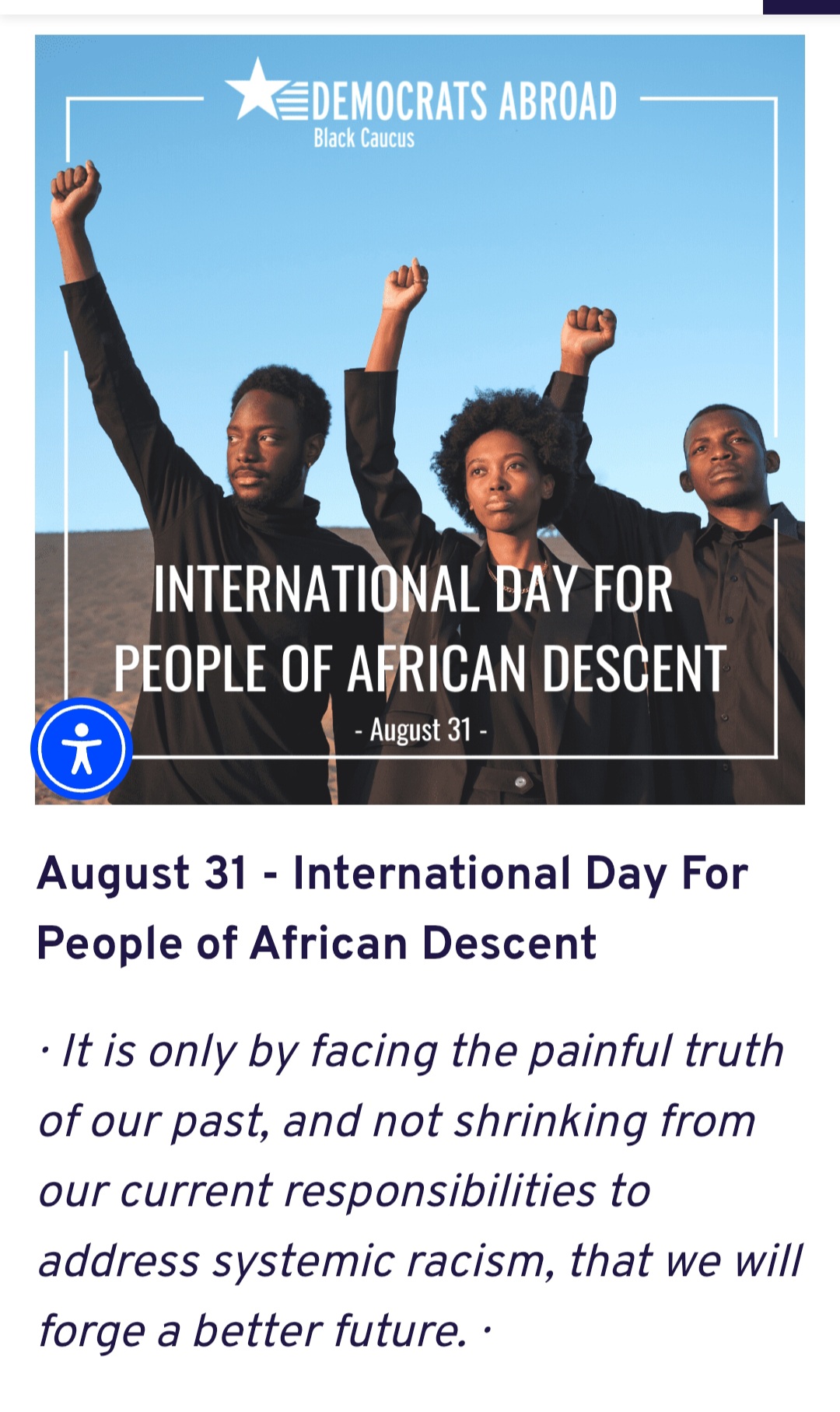
2025 International Day for People of African Descent August 31: A Public Health Expert, Dr Oluedo Eric has decried the impunity inthe continued Political, Economic, Social, Technological, Environmental and Industrial Neo Colonisation of Africa by the West, despite her daily cries for Reparatory Justice. Speaking on the African Union (AU) Theme for the 2025 Celebration: “Justice for Africans and People of African Descent Through Reparations”, Dr Oluedo also called on Nigerian Government to equally bring “Justice for Ndigbo and People of Igbo Descent Through Reparations and release of Mazi Nnamdi Kanu from detention”. He stated that just as the Reparatory Justice for Africa focuses on addressing historical injustices, including the 1444 Trans-Atlantic slave trade, 1884 Berlin job, Colonialism, Apartheid, and Genocide, the Reparatory Justice for the Igbos by Nigerian Government focuses on 1967-1970 Igbo Genocid, the £20 post war Disruptive policy implemented against Ndigbo by Gowon’s Regime, the Abandoned properties practices in Portharcourt, Lagos etc, continued Marginalisation of Ndigbo with impunity and continued detention of Mazi Nnamdi Kanu.
This initiative: “Justice for Africans and People of African Descent Through Reparations”, underscores the AU’s commitment to addressing historical injustices, including the 1444 Trans-Atlantic Slave Trade, Colonialism, Apartheid, Genocide etc. It builds on decades of advocacy and collaboration, aiming to foster unity and establish mechanisms for reparatory justice on a global scale. This is the way to pursue Reparatory justice, not the demand of Ten Trillion Naira made recently by Ohanaeze Ndigbo. I advise Ohanaeze Ndigbo to adopt a more Strategic pursuit of Reparatory Justice for Ndigbo that will include the unconditional release of Mazi Nnamdi Kanu.
UN Secretary-General António Guterres stated on this Remembrance day: “I urge States to take concrete steps, with the full participation of people of African descent and their communities, to tackle old and new forms of racial discrimination; and to dismantle entrenched structural and institutional racism.” The United Nations strongly condemns the continuing violent practices and excessive use of force by law enforcement agencies against Africans and people of African descent and condemns structural racism in criminal justice systems around the world. The Organization further acknowledges the Transatlantic Slave Trade as one of the darkest chapters in our human history and upholds human dignity and equality for the victims of slavery, the slave trade and colonialism, in particular people of African descent in the African diaspora.
Societies around the world are increasingly recognizing the role structural racism plays in driving social, economic and political inequalities; several countries have made racial profiling and discrimination illegal and have introduced policies to promote the rights and choices for people of African descent.The Transatlantic Slave Trade, which operated between the fifteenth and late nineteenth centuries, involved the horrific trafficking of millions of women, men and children, mostly from West Africa to the Americas. This forced displacement enriched imperial and other powers. It also gave rise to false narratives of white supremacy and racial inferiority, which were used to justify this shameful practice and which continue to plague our societies today. Because the transatlantic trade in enslaved Africans had a direct effect on our modern conceptions of race, an understanding of this period is necessary to fight its legacies, including racism and prejudice. Hence the Reparatory Justice.
Governments have accelerated their efforts to make Afrodescendants more statistically visible in order to address historical injustices and to bridge gaps in access to health care, social services and opportunities. Further action, political will and investments are needed to end inequalities and ensure the full empowerment of people of African descent.
👇👇👇
FACEBOOK
https://www.facebook.com/
Nze Dro?
INSTAGRAM
https://www.instagram.com/
Nze Dro?
X (TWITTER)
https://twitter.com/
@Eric Oluedo?
TICK-TOK
https://tick-tok.com/
@Nzedr.o?
YOUTUBE
https://youtube.com/ @aforrctv?