
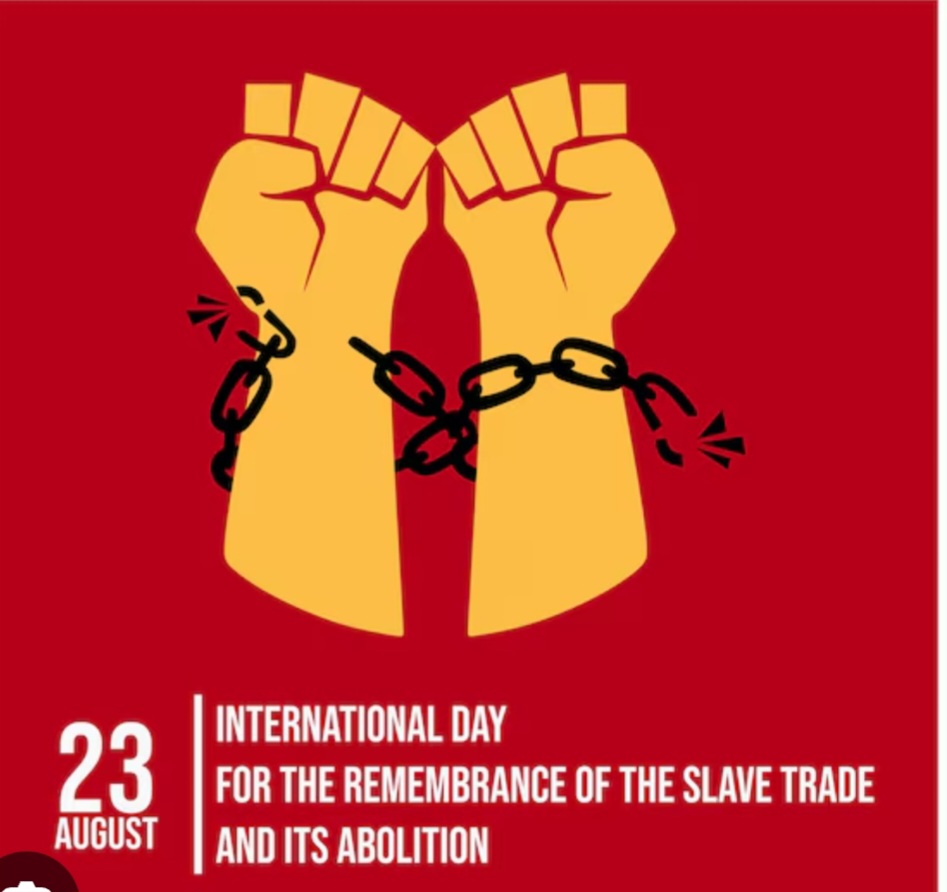
2025 International Day for the Remembrance of Slave Trade and its Abolition: A Health Economist Dr Oluedo Eric has lamented that just as Trafficking for cheap labour to work on America’s Plantations started the 1444 Slave Trade, the Modern Slave Trade is also about Trafficking for cheap labour, Sex and Debt Bondage. Speaking on this year’s celebration, Dr Oluedo described the Modern Slave Trade as more horrific than the Transatlantic Slave Trade of 1444 as every African is directly affected. The Transatlantic Slave Trade, which operated between the fifteenth and late nineteenth centuries, involved the horrific trafficking of millions of women, men and children, mostly from West Africa to the Americas. This forced displacement enriched imperial and other powers. It also gave rise to false narratives of white supremacy and racial inferiority, which were used to justify this shameful practice and which continue to plague our societies today. Because the transatlantic trade in enslaved Africans had a direct effect on our modern conceptions of race, an understanding of this period is necessary to fight its legacies, including racism and prejudice.
The International Day of Remembrance of the Victims of Slavery and the Transatlantic Slave Trade is, therefore, not just about remembering the past. It is about taking action today to dismantle the structures that continue to hold back people of African descent.
This day is a day for reflection. It is also a time for education. Despite myths to the contrary, enslaved Africans enriched the Americas not just through their labour but also through a transfer of vital skills and knowledge. In addition, rather than accepting their fate, they engaged in powerful acts of resistance. The United Nations works to highlight such stories through its Outreach Programme on the Transatlantic Slave Trade and Slavery, which is managed by the Department of Global Communications, and the Routes of Enslaved Peoples Project, which is run by the United Nations Educational, Scientific and Cultural Organization (UNESCO).
On 23 August 1791, in Saint Domingue, (Haiti), saw the beginning of the uprising that led to the abolition of the transatlantic slave trade.
It is against this background that the International Day for the Remembrance of the Slave Trade and its Abolition is commemorated on 23 August each year. It was first celebrated in a number of countries, in particular in Haiti (23 August 1998) kand Gorée Island in Senegal (23 August 1999). This International Day is intended to inscribe the tragedy of the slave trade in the memory of all peoples. It should offer an opportunity for collective consideration of the historic causes, the methods and the consequences of this tragedy, and for an analysis of the interactions to which it has given rise between Africa, Europe, the Americas and the Caribbean.
The Monument of slaves in Stone Town, Zanzibar, Tanzania reads:
“It is time to abolish human exploitation once and for all, and to recognize the equal and unconditional dignity of each and every individual. Today, let us remember the victims and freedom fighters of the past so that they may inspire future generations to build just societies.”
👇👇👇
FACEBOOK
https://www.facebook.com/
Nze Dro?
INSTAGRAM
https://www.instagram.com/
Nze Dro?
X (TWITTER)
https://twitter.com/
@Eric Oluedo?
TICK-TOK
https://tick-tok.com/
@Nzedr.o?
YOUTUBE
https://youtube.com/ @aforrctv?